










Mastering the Inner Game of Performance

What separates consistent performers from inconsistent ones?

Many times people assume the difference lies in effort, experience, or intelligence.

it isn’t effort

it isn't experience

It isn't Intelligence

it’s how their inner system operates.

This work looks beneath skills and strategy to examine the internal drivers that quietly shape focus, execution, confidence, and momentum — day after day

What Is the Inner Game of Performance?

The Inner Game of Performance refers to the internal conditions that shape how effectively someone performs — regardless of role, context, or experience.

It includes how a person:

  • focuses attention

  • interprets situations

  • manages internal states

  • executes under varying levels of demand

This work is not about motivation or mindset alone.
It’s about how performance is internally generated, moment by moment.

Why Most Performance Plateaus Go Unnoticed?

Performance rarely drops dramatically.
It stabilizes.

People continue to perform — but below their true capacity — without realizing why growth has slowed, execution feels heavier, or effort yields diminishing returns.

Because these limits are internal, they’re often misattributed to:

  • external pressure

  • workload

  • environment

  • lack of time

The Inner Game addresses what usually goes unnamed — yet quietly governs performance.

The Hidden Cost of Untapped Performance

Untapped performance isn’t about things going wrong.
It’s about what never fully comes online.

When internal capability isn’t fully accessed, people continue to perform — often well — but below the level of achievement they are actually capable of sustaining.

The real cost shows up as:

  • operating within familiar limits rather than expanded ones

  • achieving results, but not at one’s true range

  • relying on effort instead of leverage

  • progress that is incremental when it could be exponential

Over time, this becomes accepted as “normal,” even though significantly higher levels of performance remain available.

The Inner Game Architecture

At the heart of performance lies an internal architecture — a combination of:

  • cognition

  • physiological state

  • interpretation

  • identity

When these elements are aligned, performance feels cleaner, faster, and more natural.
When they’re misaligned, effort increases while output plateaus.

This work helps participants recognize, experience, and recalibrate that architecture.

How the Experience Is Delivered?

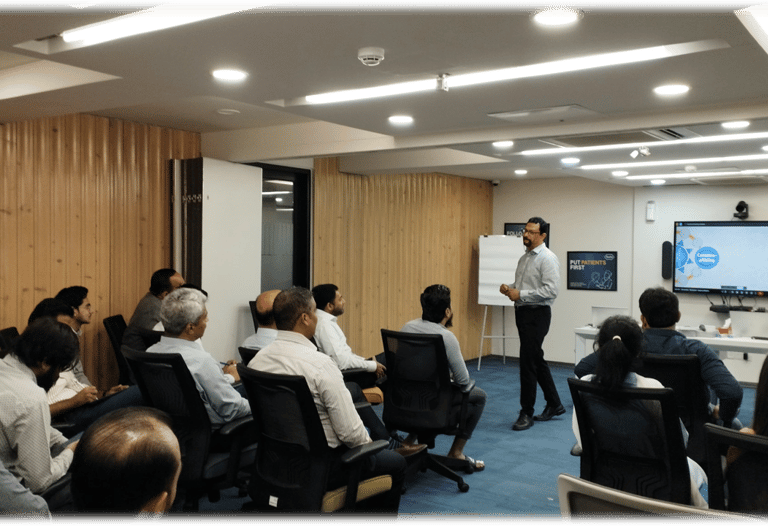
This work is delivered through high-energy, experience-first formats, including:

  • Keynotes

  • Interactive seminars

  • Practical workshops

  • Series-based engagements

Participants don’t just hear ideas — they experience internal shifts in real time, making the learning immediately relevant and usable.

What Changes When the Inner Game Shifts

When the Inner Game is strengthened, people commonly notice:

  • sharper focus

  • cleaner execution

  • greater consistency

  • improved confidence

  • reduced internal friction

Performance feels less forced — and more intentional.

Who This Work Is For?

This work applies to everyone.

Because performance is not role-specific — it is human.

Anyone who wants to:

  • grow

  • execute more effectively

  • perform with greater consistency

  • improve internal mastery

  • operate closer to their true capability

will find this work relevant — across roles, contexts, and stages of life or career.

At Its Core

At its core, Mastering the Inner Game of Performance works with a small set of fundamental internal drivers that shape how performance is generated.

When these core elements are aligned, performance improves naturally — across thinking, execution, confidence, learning, and results.